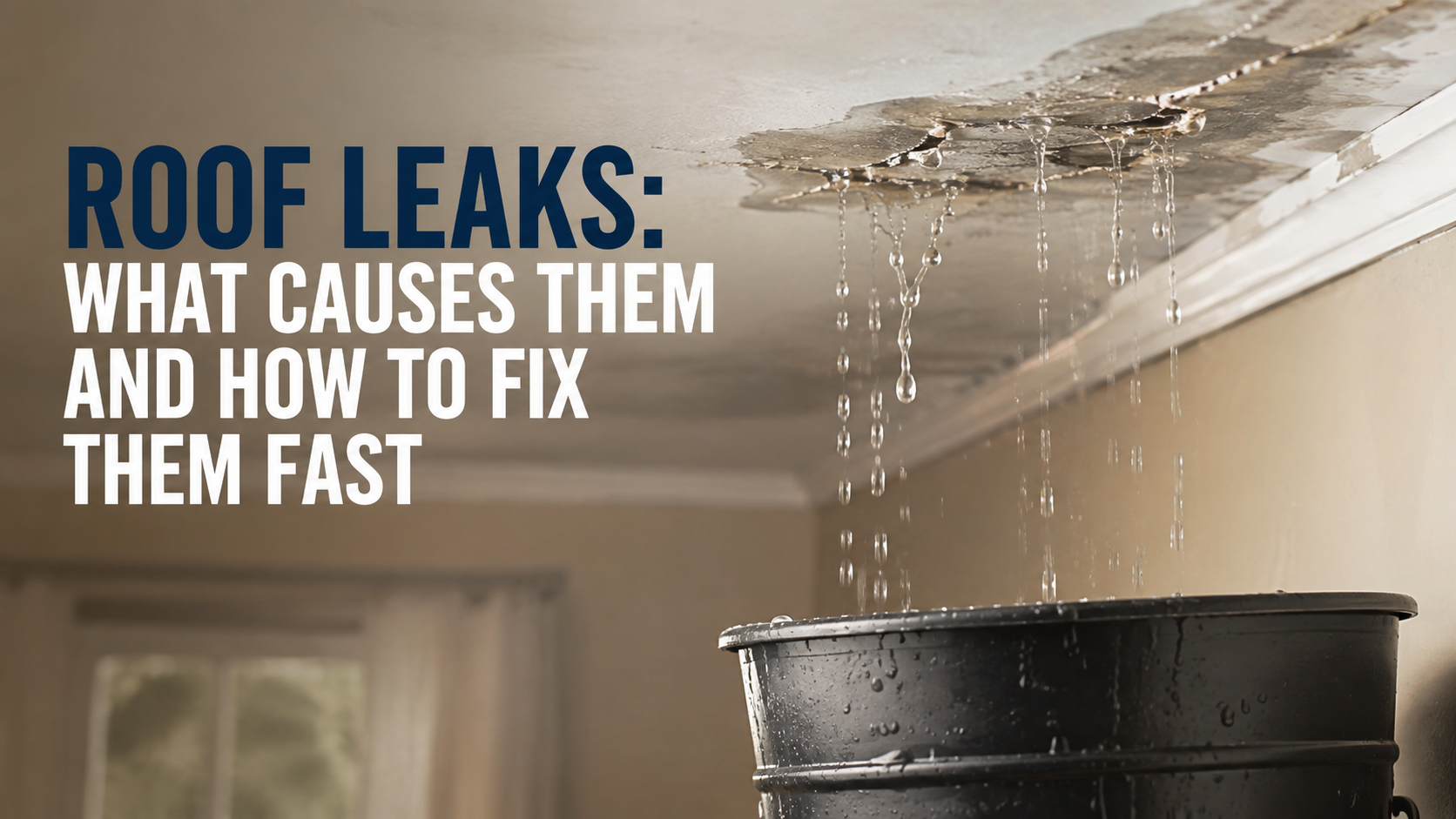
A leaking roof is one of those home problems that should never be ignored. What starts as a small drip or a faint water stain on the ceiling can quickly turn into damaged drywall, ruined insulation, mold growth, rotting wood, and expensive structural repairs. Unfortunately, roof leaks are not always obvious, and the place where water appears inside your home may be several feet away from where it actually entered the roofing system.
For homeowners in Indianapolis and throughout Central Indiana, changing weather can make roof leaks especially troublesome. Heavy rain, thunderstorms, snow, ice, wind, and temperature fluctuations can all take a toll on roofing materials over time.
At John Peters Roofing, we understand how important it is to identify the source of a roof leak and make the proper repairs as quickly as possible. Knowing what commonly causes roof leaks—and what to do when you discover one—can help you protect your home and avoid unnecessary damage.
Why Roof Leaks Need to Be Addressed Quickly
A small roof leak may not seem like an emergency, especially if you only notice it during particularly heavy rain. However, water can cause significant damage long before you see a steady drip inside your home.
Water entering through the roof can soak insulation, roof decking, rafters, drywall, and other building materials. Moisture trapped in these areas may eventually contribute to wood rot and mold growth.
Leaks can also travel. Water may enter near a chimney, vent, or damaged shingle before running along the roof decking or framing and eventually dripping into another part of the house. This is why simply patching the ceiling where you see water doesn’t solve the underlying problem.
The faster the source is located and repaired, the better your chances of limiting the damage.
Damaged or Missing Shingles
One of the most common causes of residential roof leaks is damaged or missing shingles.
Asphalt shingles are designed to overlap and create a protective barrier that directs water off the roof. When shingles become cracked, curled, loose, or completely missing, the layers underneath can become exposed to moisture.
High winds and storms are common causes of shingle damage. Shingles can also deteriorate naturally as the roof ages.
You may be able to spot missing shingles from the ground, but other types of damage can be much harder to see. A professional roof inspection can determine whether individual shingles can be replaced or whether more extensive repairs are necessary.
Damaged or Improperly Installed Flashing
Roof flashing is installed around vulnerable areas where roofing materials meet other structures. You’ll commonly find flashing around chimneys, skylights, roof valleys, walls, vents, and other penetrations.
When flashing becomes damaged, corroded, loose, or improperly sealed, water may find its way underneath the roofing materials.
Flashing problems can be particularly frustrating because the surrounding shingles may look perfectly fine. The leak may actually be caused by a small gap or failed seal around the flashing.
Proper flashing installation is one of the most important parts of creating a watertight roofing system. If flashing is responsible for a leak, it should be repaired or replaced rather than simply covered with excessive roofing cement or temporary sealant.
Clogged or Damaged Gutters
Your gutters play an important role in protecting your roof and home from water damage.
Gutters collect rainwater from the roof and direct it away from the structure. When they become clogged with leaves, sticks, roofing granules, or other debris, water can back up along the roof edge.
In some situations, this moisture can work its way underneath shingles or contribute to deterioration around the fascia and roof decking.
Damaged, sagging, or improperly pitched gutters can create similar problems.
Keeping gutters clean and properly maintained is a relatively simple way to reduce the risk of moisture problems around your roofing system.
Roof Vent Leaks
Plumbing vents, exhaust vents, and other roof penetrations create potential entry points for water.
Most roof vents are protected by flashing and rubber seals or boots. Over time, these components can crack, deteriorate, or pull away from the surrounding roofing materials.
Even a small crack around a vent boot can allow rainwater into the attic.
Because vent leaks are often isolated to a relatively small area, they can sometimes be repaired quickly when caught early. The damaged flashing or boot may need to be replaced and properly sealed.
Chimney Leaks
Chimneys are another common source of roof leaks because several materials and seams come together in a relatively small area.
Leaks around chimneys may be caused by damaged flashing, deteriorated mortar, cracked chimney crowns, or failed sealants.
Water can also enter behind flashing if it was not installed correctly.
Determining whether the problem originates with the roof, flashing, or chimney itself is important before repairs begin. Otherwise, you may fix one component while the actual source of the leak remains.
Problems Around Skylights
A properly installed skylight can provide years of natural light without causing problems. However, older or improperly installed skylights can become a source of roof leaks.
Water may enter because of failed flashing, deteriorated seals, damaged components, or improper installation.
Condensation can sometimes be mistaken for a skylight leak as well. A roofing professional can inspect the surrounding roofing materials and flashing to determine where the moisture is coming from.
Roof Valleys
A roof valley is the area where two sections of a sloped roof meet. Valleys handle a significant amount of rainwater because water from both roof sections is directed into the same channel.
That makes proper installation especially important.
Damaged shingles, deteriorated valley flashing, debris buildup, or installation problems can allow water to penetrate the roofing system.
Leaks involving valleys should be addressed quickly because these areas can experience substantial water flow during heavy Indiana rainstorms.
Ice Dams During Indiana Winters
Winter weather creates another potential source of roof leaks.
Heat escaping from the home can cause snow on the roof to melt. As the water reaches colder sections near the roof edge, it may refreeze and create an ice dam.
Additional melting snow can then collect behind the ice. Instead of draining normally, the water may work its way underneath shingles and into the home.
Proper attic insulation and ventilation can help reduce conditions that contribute to ice dams. If you regularly experience winter roof problems, it may be worth having the roofing and attic systems inspected.
An Aging Roof
Sometimes there isn’t one dramatic cause behind a leak. The roofing system may simply be reaching the end of its useful life.
As asphalt shingles age, they can lose granules, become brittle, crack, curl, and lose their ability to protect the layers underneath.
Older roofs may also develop multiple vulnerable areas at once.
If one small section is damaged while the rest of the roof remains in good condition, a repair may make sense. If leaks continue appearing in different areas of an aging roof, replacement may eventually be the more practical long-term solution.
Storm and Wind Damage
Indiana storms can bring strong winds, hail, falling tree limbs, and heavy rainfall.
Wind can lift shingles without completely removing them. From the ground, the roof may appear normal even though the seal underneath a shingle has been broken.
Hail and flying debris can also damage roofing materials and flashing.
After a significant storm, pay attention to missing shingles, roofing debris in the yard, damaged gutters, or new water stains inside the house. If you suspect damage, scheduling a professional roof inspection can help identify problems before the next storm arrives.
What Should You Do When Your Roof Starts Leaking?
If you discover water entering your home, your first priority should be limiting interior damage while arranging for professional roof repairs.
Move furniture, electronics, and valuables away from the affected area. Place a bucket or container underneath active drips and clean up standing water when it is safe to do so.
If the ceiling is bulging with water, avoid standing directly underneath it.
You can also look inside the attic for signs of moisture if the area is safely accessible. Wet insulation, darkened wood, or visible dripping may provide clues about the affected area.
However, avoid climbing onto a wet or storm-damaged roof yourself. Roofing surfaces can become extremely slippery, and hidden damage can make walking on the roof dangerous.
How Professional Roof Leak Repair Works
Finding the true source of a leak is often the most important part of the repair process.
A roofing contractor will typically inspect the area where water appeared inside the home and then evaluate the corresponding areas of the roof. Shingles, flashing, vents, valleys, roof penetrations, and other potential trouble spots may need to be examined.
Once the source is identified, the appropriate repair can be made.
Depending on the problem, repairs might include replacing damaged shingles, repairing flashing, replacing vent boots, resealing certain roof penetrations, or replacing damaged sections of roof decking.
The goal should always be to correct the underlying problem rather than simply hide the symptoms.
Can You Temporarily Patch a Roof Leak?
Temporary repairs can sometimes help reduce water intrusion until permanent repairs can be completed, particularly after severe storms.
However, temporary patches should not be considered a long-term solution.
Roofing cement, tarps, and sealants may slow a leak, but they don’t necessarily address damaged shingles, flashing, decking, or other underlying problems.
Repeatedly patching the same area can also make future repairs more complicated.
If your roof is leaking, having the source professionally evaluated is the safest way to determine what actually needs to be repaired.
When Does a Roof Leak Mean You Need a New Roof?
Not every leak means you need an entirely new roof.
A relatively new roof with isolated storm damage may only require a straightforward repair. On the other hand, an older roof experiencing widespread deterioration and repeated leaks may be approaching the point where replacement makes more financial sense.
Factors such as the age of the roof, extent of the damage, condition of the shingles, number of previous repairs, and condition of the roof decking should all be considered.
A reputable roofing contractor should help you understand whether repair or replacement makes the most sense for your situation.
Preventing Future Roof Leaks
Routine roof maintenance can help identify small problems before they turn into major leaks.
Homeowners should periodically look for missing or damaged shingles, keep gutters and downspouts clear, trim branches that hang over the roof, and pay attention to changes inside the attic or on ceilings.
Professional roof inspections can also uncover problems that aren’t easily visible from the ground.
After severe weather, an inspection can be particularly helpful if you suspect your roof may have been damaged.
Need Fast Roof Leak Repair in Indianapolis?
A roof leak rarely gets better on its own. The longer water is allowed to enter your home, the greater the potential for damage to insulation, ceilings, walls, roof decking, and other parts of the structure.
Whether the problem is caused by missing shingles, damaged flashing, a leaking vent, storm damage, or an aging roofing system, finding the source quickly is the key to preventing additional damage.
John Peters Roofing provides professional roof repair and roofing services throughout Indianapolis and the surrounding communities. Our team can inspect your roof, identify the source of the leak, and recommend the right repair or replacement solution for your home.
If you’ve noticed a ceiling stain, active dripping, missing shingles, or other signs of a roofing problem, don’t wait for the next storm to make things worse. Contact John Peters Roofing today to schedule a roof inspection and get your home protected again.