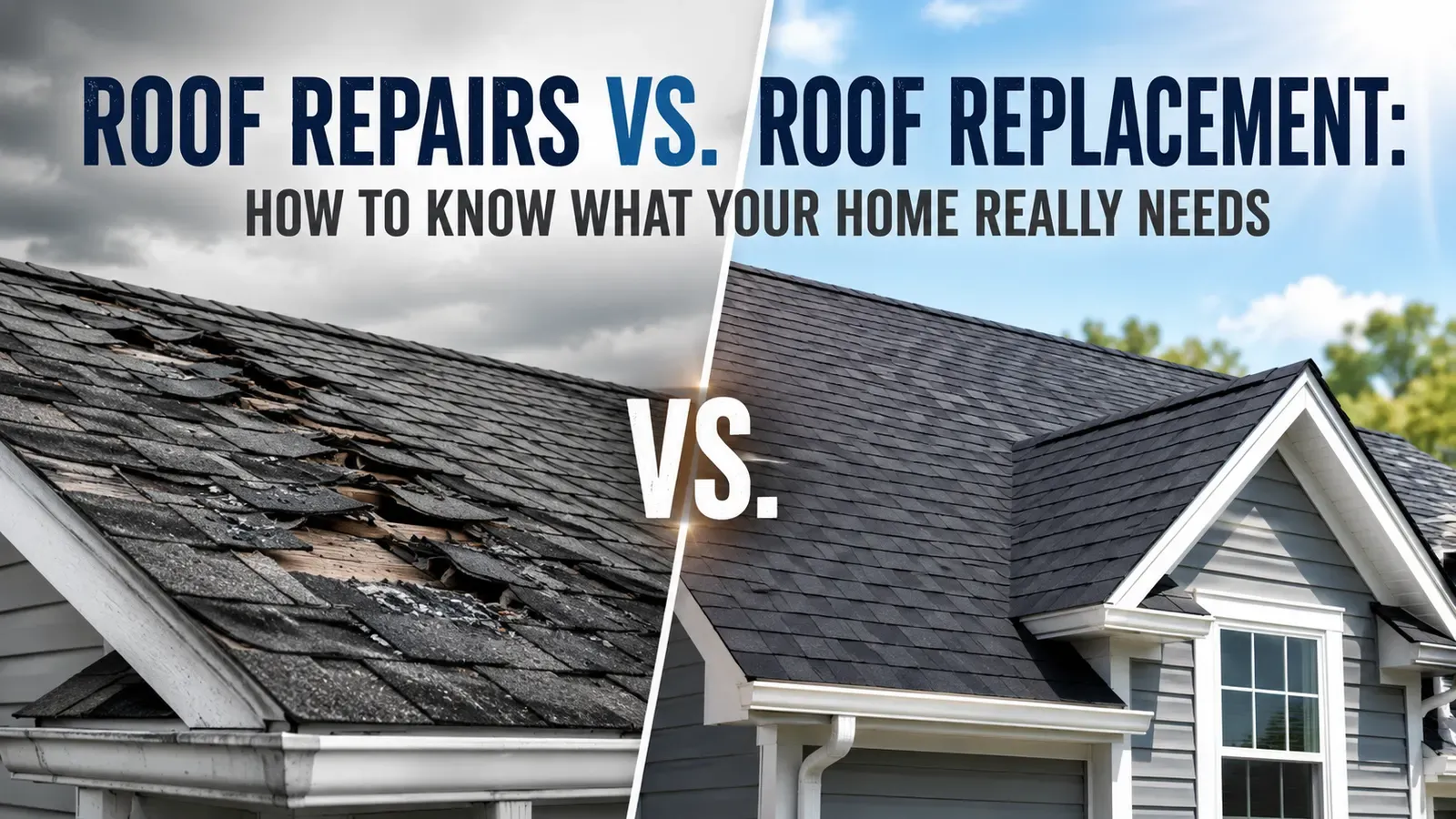
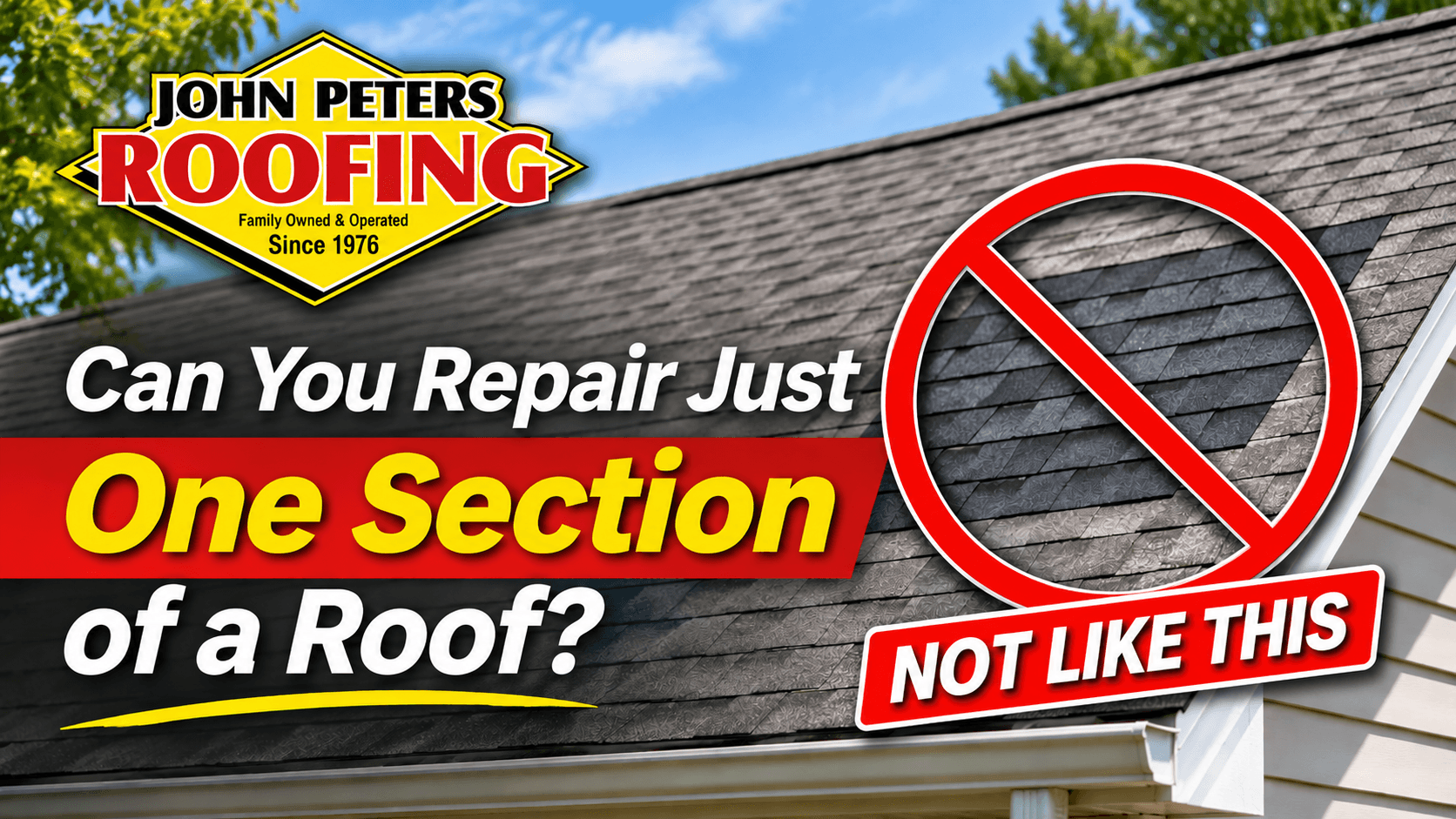
Can You Repair Just One Section of a Roof?
When part of your roof is damaged, replacing the entire roof might seem like an unnecessary expense. Maybe a recent storm tore shingles off one side of your home, a small leak developed around a vent, or a fallen branch damaged a particular section. If the rest of your roof appears to be in good condition, you might wonder whether repairing only the damaged area is an option.
The good news is that you can often repair just one section of a roof without replacing the entire roofing system. However, whether a partial roof repair is the right choice depends on several factors, including the roof's age, the extent of the damage, the condition of surrounding materials, and local building requirements.
For homeowners in Indianapolis and throughout Central Indiana, understanding when partial repairs make sense can help you avoid unnecessary expenses while protecting your home from future problems.
What Is a Partial Roof Repair?
A partial roof repair involves fixing or replacing roofing materials in a specific area rather than removing and replacing the entire roof.
Depending on the damage, this might involve replacing several missing shingles, repairing flashing around a chimney, addressing a leak near a roof vent, or replacing a larger section of damaged roofing.
For example, if strong winds damage shingles on one side of your home but leave the remaining roof intact, a roofing contractor may be able to repair the affected area.
However, there is an important distinction between a small repair and a partial roof replacement.
A minor repair might involve replacing a handful of shingles or resealing a properly repairable flashing connection. A partial replacement may require removing a larger area of roofing materials, inspecting the underlying decking, and installing new underlayment and shingles.
Both approaches can be effective, but the work must be completed correctly to maintain the roof's ability to shed water and withstand the elements.
When Can You Repair Just One Section of a Roof?
Not every roofing problem requires a complete replacement. In many situations, localized repairs provide a practical, cost-effective solution.
1. The Damage Is Limited to a Small Area
One of the clearest signs that a partial repair may be appropriate is damage concentrated in one location.
Common examples include:
A few missing or wind-damaged shingles
Minor damage from a fallen tree branch
A leak around a plumbing vent
Damaged flashing near a chimney
A small section of shingles affected by localized weather damage
If the surrounding roofing materials remain in good condition, repairing the affected area may restore the roof's protection without requiring extensive replacement.
However, visible damage does not always reveal the full extent of the problem. A professional inspection can help determine whether water has traveled beneath the shingles or damaged nearby materials.
2. The Roof Is Relatively New
The age of your roof plays an important role in determining whether a partial repair makes financial sense.
If your asphalt shingle roof was installed only a few years ago and remains in good condition, replacing the entire system because of a small damaged area may be unnecessary.
Newer shingles are generally more flexible and easier to work with than older, brittle materials. They may also be easier to match with currently available replacement products.
Older roofs present additional challenges. Removing damaged shingles can sometimes cause surrounding shingles to crack, tear, or lose their sealing ability.
If your roof is approaching the end of its expected lifespan, investing in repeated repairs may be less economical than planning for replacement.
3. The Underlying Roof Structure Is Still Sound
Roofing shingles are only one part of your roofing system.
Beneath them are materials such as underlayment and roof decking, which help support the roof covering and protect your home.
If damage is limited to the outer roofing materials, a localized repair may be relatively straightforward.
However, if an inspection reveals rotted decking, moisture damage, or structural deterioration, additional work may be necessary.
A roofing contractor should evaluate the underlying materials before determining the appropriate repair.
Importantly, damaged or unsound decking should not simply be covered with new shingles.
4. Matching Replacement Shingles Are Available
Finding replacement shingles that closely match your existing roof is another consideration.
Manufacturers occasionally discontinue products, change colors, or update shingle designs. Even when the original product remains available, years of sunlight and weather exposure can change the appearance of existing shingles.
A slight color difference may be primarily cosmetic, but differences in shingle dimensions, profiles, installation requirements, or compatibility can create more significant concerns.
Your roofing contractor should determine whether suitable replacement materials are available and whether they can be properly integrated with the existing roof.
When Is a Full Roof Replacement the Better Option?
Although partial repairs can save money, they are not always the best long-term solution.
Several conditions may make a complete roof replacement more practical.
Widespread Roofing Damage
If multiple areas of your roof have missing shingles, significant granule loss, cracking, or water intrusion, repairing individual sections may not address the overall problem.
Storm damage can also extend beyond the most visibly affected area.
For example, high winds may loosen shingles across several roof slopes, even if only a few shingles are completely missing.
A thorough inspection can help identify the full extent of the damage.
An Aging Roof
Asphalt shingle roofs commonly last around 20 to 30 years, although actual service life varies considerably depending on the materials, installation quality, ventilation, and weather exposure.
If your roof is already nearing the end of its useful life, a major partial repair may only postpone an inevitable replacement.
In this situation, homeowners should compare the cost of repairs with the expected remaining lifespan of the roof.
Repeated Leaks or Previous Repairs
If you've already repaired the same area several times, there may be an underlying issue that hasn't been properly addressed.
Repeated leaks can result from improperly installed flashing, deteriorating materials, inadequate drainage, or installation defects.
Continuing to patch the visible symptoms without correcting the cause can lead to additional water damage.
A professional roofing evaluation can help determine whether a more comprehensive solution is needed.
Does Indiana Allow Partial Roof Repairs?
Yes. Indiana's residential building code does not impose a blanket requirement to replace an entire roof whenever a portion becomes damaged.
For typical one- and two-family residential construction, Indiana uses the 2020 Indiana Residential Code, based on the 2018 International Residential Code with Indiana amendments. The code establishes requirements for roofing materials, installation, weather protection, and other construction standards.
Indiana Government+1
However, the fact that partial repairs are generally permitted does not mean every proposed repair automatically complies with applicable requirements.
Roofing work must still meet relevant construction standards, manufacturer installation instructions, and local requirements.
Do You Need a Permit for a Partial Roof Repair in Indianapolis?
Not necessarily.
Indianapolis Municipal Code Section 536-201 provides a building-permit exemption for certain residential roof replacement projects when performed by a qualifying contractor or owner-occupant.
The exemption has limitations. For example, it does not cover certain changes to roof configuration, changes to heavier roofing materials, specified structural replacements, or heat-applied roofing work.
Municode Library+1
Other municipalities may have different requirements.
Homeowners in Fishers, Greenwood, and other Central Indiana communities should verify the rules with their local building department before beginning work.
Properties in designated historic districts may also be subject to additional approval requirements.
The important takeaway: A partial roof repair may be permitted, but the exact work, property location, and applicable local regulations determine whether permits or approvals are necessary.
Will Homeowners Insurance Cover a Partial Roof Repair?
If your roof was damaged by a covered event, such as wind or hail, your homeowners insurance policy may help pay for repairs.
However, coverage depends on your policy, the cause of the damage, applicable exclusions, and the insurance company's assessment.
Insurance generally does not cover ordinary wear and tear or damage resulting solely from aging and neglected maintenance.
Another common question involves matching shingles.
What happens if the insurance company agrees to replace damaged shingles, but the new materials don't match the existing roof?
Indiana does not have a blanket rule requiring insurance companies to replace an entire roof simply because replacement shingles are a different color.
An Indiana Court of Appeals decision, Erie Insurance Exchange v. Sams (2014), addressed replacement-cost coverage and the appearance of repaired roofing and siding. However, the decision was based on the specific policy language, evidence, and damage involved. It does not establish automatic entitlement to a new roof in every matching dispute.
Justia Law+1
If you're filing an insurance claim, review your policy carefully and ask your insurer for a written explanation of the approved repair scope.
A roofing contractor can document the physical damage and provide a repair estimate, while coverage decisions and claim disputes should be handled through the appropriate insurance professionals.
How Much Does It Cost to Repair Part of a Roof?
The cost of a partial roof repair depends on the size of the damaged area, the roofing materials involved, the roof's slope, and how difficult the affected area is to access.
Replacing a few damaged shingles is generally less expensive than repairing a large section that requires new decking, underlayment, and flashing.
However, the cheapest immediate repair is not necessarily the most economical long-term solution.
For example, spending money on a substantial repair to a roof that will need complete replacement within the next year or two may not be the best investment.
A professional roofing estimate should explain the proposed work, materials, and any conditions that could affect the final cost.
How Do You Know Which Roofing Option Is Right for Your Home?
The best way to determine whether your roof needs a small repair, a partial replacement, or a complete replacement is through a professional inspection.
An experienced roofing contractor can evaluate the damaged area, inspect surrounding shingles, check accessible underlying materials, and identify potential moisture problems.
They can also explain whether replacement shingles are available and how the proposed repair will integrate with the existing roofing system.
For Indianapolis homeowners, this evaluation is particularly valuable following severe thunderstorms, high winds, hail, and winter weather.
Rather than assuming the entire roof needs replacement, start by understanding the actual condition of your roofing system.
Schedule a Professional Roof Inspection With John Peters Roofing
If you've noticed missing shingles, a roof leak, or damage confined to one area of your home, you may not need to replace your entire roof.
At John Peters Roofing, we help homeowners throughout Indianapolis and surrounding Central Indiana communities evaluate roofing problems and understand their repair and replacement options.
Whether your roof needs a localized repair or a more extensive solution, our goal is to help you make an informed decision that protects your home and your investment.
Contact John Peters Roofing today to discuss your roofing concerns and schedule an inspection.