
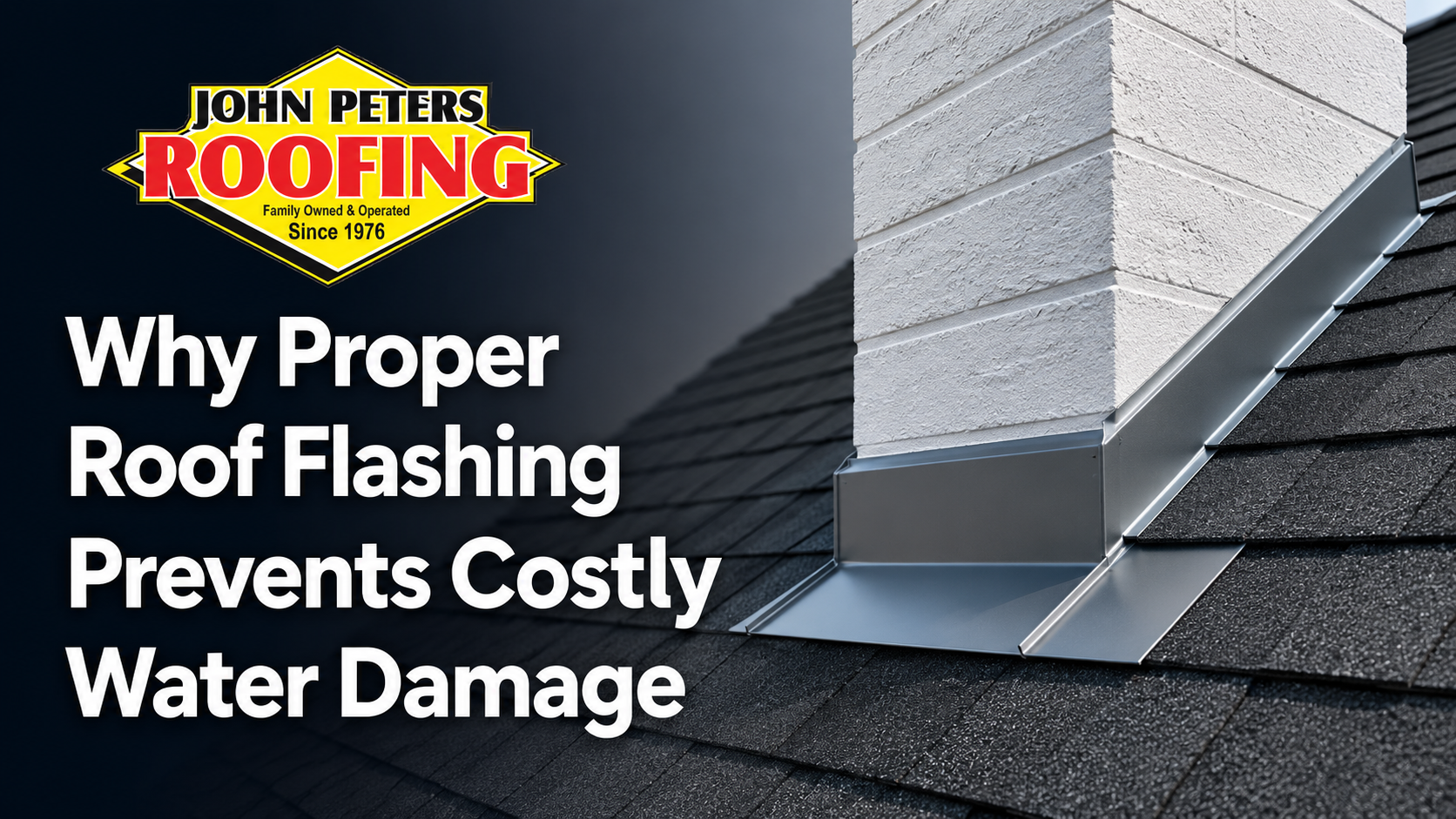
Your roof is designed to protect your home from the elements, but shingles alone cannot keep water out. Some of the most vulnerable areas of any roofing system are where different building materials meet, such as around chimneys, skylights, vents, walls, and roof valleys. These areas require an extra layer of protection known as roof flashing. When flashing is installed correctly, it helps direct water away from these vulnerable points and prevents leaks before they start.
Unfortunately, damaged, improperly installed, or aging flashing is one of the leading causes of roof leaks. Even a small gap can allow moisture to seep beneath your roofing materials, leading to expensive repairs that extend far beyond the roof itself. At John Peters Roofing, we help homeowners throughout Indianapolis and Central Indiana protect their homes by ensuring every roof includes properly installed, high-quality flashing.
What Is Roof Flashing?
Roof flashing is a thin piece of metal installed anywhere water is likely to collect or penetrate the roof. Its primary purpose is to create a waterproof barrier that directs rainwater away from seams, joints, and openings.
Most flashing is made from durable materials such as aluminum, galvanized steel, or copper because these metals resist corrosion and can withstand years of exposure to Indiana’s changing weather conditions.
While shingles shed water across large roof surfaces, flashing protects the areas where shingles alone cannot provide a watertight seal.
Where Roof Flashing Is Installed
A properly installed roof includes flashing in several important locations. Each area plays a specific role in keeping moisture outside your home.
Chimneys
Chimneys create one of the largest interruptions in a roof’s surface. Flashing surrounds the base of the chimney to seal the connection between the roofing materials and the brick or stone. Without proper flashing, rainwater can easily work its way inside.
Roof Valleys
Roof valleys are where two roof slopes meet. These areas naturally channel large amounts of rainwater during storms. Valley flashing provides an extra layer of protection in one of the highest-flow areas on the roof.
Roof Vents
Plumbing vents, furnace vents, and other roof penetrations require specially designed flashing boots that seal tightly around pipes while allowing for normal expansion and contraction.
Skylights
Skylights add natural light to your home but also create another location where water can enter if flashing is not installed correctly. Proper flashing channels water around the skylight rather than allowing it underneath.
Dormers and Sidewalls
Where a roof meets a vertical wall, step flashing is installed beneath the shingles to create overlapping layers that move water safely downward.
Why Flashing Is So Important
Flashing often goes unnoticed because it isn’t the most visible part of your roof. However, it performs one of the most important jobs in the entire roofing system.
When flashing functions properly, it prevents water from reaching the wooden decking, insulation, drywall, framing, and electrical systems beneath the roof.
When flashing fails, the damage often spreads quickly.
Instead of remaining on the roof’s surface, water begins traveling into your attic and walls. Because this process can happen slowly over time, many homeowners don’t discover the problem until significant damage has already occurred.
Common Causes of Flashing Failure
Although flashing is built to last for many years, it is not indestructible. Several factors can cause flashing to deteriorate or become damaged.
Improper Installation
Poor workmanship is one of the leading causes of flashing problems. Flashing that is nailed incorrectly, installed in the wrong sequence, or improperly sealed may begin leaking long before the roof reaches the end of its lifespan.
Age
Over time, sealants dry out, fasteners loosen, and metal expands and contracts with changing temperatures. Eventually, flashing may crack or separate from surrounding materials.
Severe Weather
Indiana experiences heavy rain, snow, ice, hail, and strong winds throughout the year. These weather conditions place constant stress on flashing and may cause it to loosen or become damaged.
Rust and Corrosion
Although modern flashing materials are highly durable, older galvanized flashing may eventually rust after decades of exposure to moisture.
Roof Movement
Homes naturally settle over time. Seasonal expansion and contraction can also shift roofing materials slightly, creating small openings where flashing was once tightly sealed.
Warning Signs of Flashing Problems
Because flashing damage often starts small, recognizing the warning signs early can prevent much larger repair bills later.
Watch for signs such as:
- Water stains on ceilings or walls
- Damp attic insulation
- Dripping water after heavy rain
- Loose or missing flashing around chimneys
- Rusted metal around roof penetrations
- Cracked sealant
- Missing shingles near flashing areas
- Mold or mildew in the attic
- Soft or rotting wood around roof edges
If you notice any of these issues, scheduling a professional roof inspection is the best way to identify the source before additional damage occurs.
The Hidden Costs of Water Damage
Many homeowners assume a small roof leak is only a minor inconvenience. Unfortunately, water rarely stays in one location.
As moisture travels through your home, it can damage multiple building systems.
Structural Damage
Water can rot roof decking, rafters, ceiling joists, and wall framing. Repairs may require replacing structural wood in addition to roofing materials.
Mold Growth
Moisture trapped inside attics and walls creates the ideal environment for mold growth. Mold remediation often adds significant cost to roof repairs.
Insulation Damage
Wet insulation loses much of its effectiveness, causing heating and cooling costs to increase throughout the year.
Interior Repairs
Water stains, damaged drywall, peeling paint, warped flooring, and ruined trim frequently occur after prolonged roof leaks.
Electrical Hazards
Leaks that reach electrical wiring, fixtures, or breaker panels can create dangerous safety risks that require immediate attention.
Why Professional Installation Matters
Installing flashing properly requires precision and experience. Every roof has unique angles, penetrations, and drainage patterns that must be considered.
Professional roofers understand how different flashing systems work together with underlayment, shingles, ice and water shield, and ventilation to create a complete waterproof system.
Simply applying roofing cement or caulk over damaged flashing is rarely a permanent solution. Temporary patches often fail within months because they don’t address the underlying problem.
Proper flashing repair usually involves removing surrounding shingles, replacing damaged materials, and reinstalling flashing according to manufacturer specifications.
Flashing During Roof Replacement
One question many homeowners ask is whether existing flashing can be reused during a roof replacement.
In most cases, replacing old flashing is the better investment.
Although it may appear to be in good condition, older flashing often has hidden wear, weakened fasteners, or aging sealants that may fail long before the new shingles.
Installing new flashing during roof replacement helps maximize the lifespan of your new roof while reducing the chance of future leaks.
How Regular Roof Inspections Help
Routine roof inspections allow professionals to identify flashing issues before they become expensive problems.
During an inspection, a roofing contractor will examine:
- Chimney flashing
- Valley flashing
- Vent boots
- Skylight flashing
- Wall flashing
- Ridge areas
- Sealants
- Fasteners
- Signs of corrosion or movement
Annual inspections are especially valuable after severe storms, hail events, or high winds that may loosen flashing without creating immediately visible leaks.
Indiana Weather Makes Flashing Even More Important
Homes throughout Indianapolis and Central Indiana experience a wide variety of weather throughout the year.
Heavy spring rains, summer thunderstorms, hail, fall temperature swings, and winter snow all place stress on roofing materials. Freeze-thaw cycles can cause tiny gaps to expand over time, while strong winds may lift shingles near flashing locations.
Because flashing protects the roof’s most vulnerable areas, keeping it in excellent condition is one of the best ways to prevent costly weather-related damage.
Protect Your Home Before Small Problems Become Big Repairs
Roof flashing may not receive as much attention as shingles, but it plays a critical role in protecting your home from water intrusion. Properly installed flashing helps direct rainwater away from vulnerable areas, extends the life of your roof, and prevents expensive structural damage inside your home.
Whether your roof is a few years old or several decades old, routine inspections and timely flashing repairs can save thousands of dollars by stopping leaks before they spread.
If you suspect your roof has damaged flashing or you’re planning a roof replacement, the experienced team at John Peters Roofing is here to help. We proudly serve homeowners throughout Indianapolis and Central Indiana with professional roof inspections, repairs, and complete roof replacement services. Contact us today to schedule an inspection and make sure every part of your roofing system—including the flashing—is ready to protect your home for years to come.