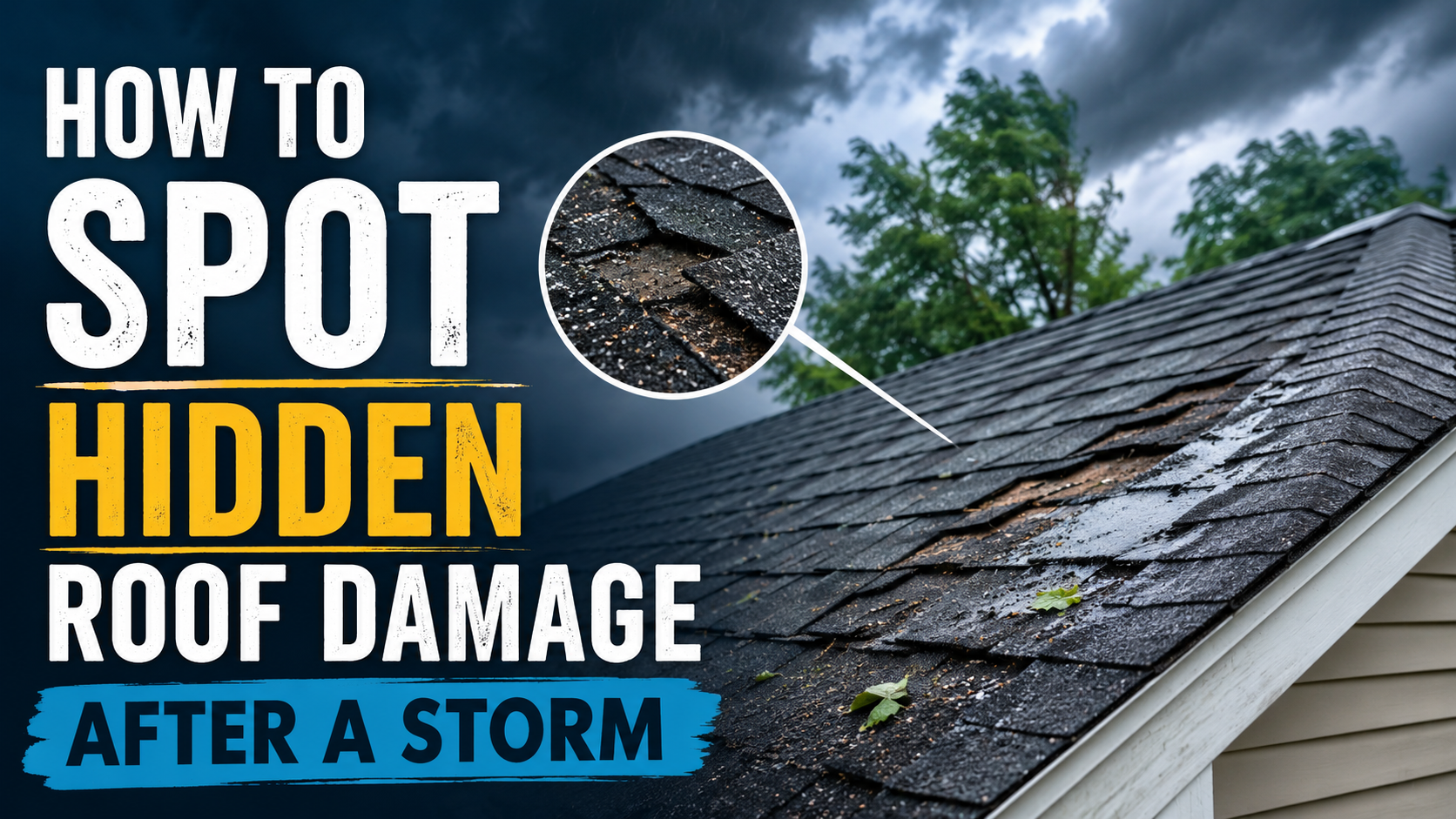
Storms can leave behind obvious damage like missing shingles or fallen tree branches, but not every roofing problem is easy to see. In many cases, the most expensive damage begins where homeowners can’t spot it from the ground. High winds, hail, heavy rain, and flying debris can weaken your roofing system without creating immediate leaks or visible signs.
Ignoring hidden roof damage can lead to costly repairs months later. Water intrusion, mold growth, rotted decking, insulation damage, and even structural issues often start with small problems that go unnoticed after a storm.
Knowing what to look for—and when to schedule a professional inspection—can help protect your home and potentially save thousands of dollars in future repairs.
Why Hidden Roof Damage Is So Common
Many homeowners assume that if their roof isn’t leaking, everything is fine. Unfortunately, that’s not always true.
Storm damage often affects the protective layers of your roofing system long before water begins dripping into your home. Asphalt shingles can lose protective granules, flashing can loosen, and seals around vents or chimneys can break without creating immediate symptoms.
Over time, repeated exposure to rain, sunlight, and changing temperatures allows these minor issues to grow into major problems.
That’s why roofing professionals recommend inspecting your roof after severe weather—even if everything appears normal from the ground.
Check Your Yard First
One of the easiest ways to identify possible roof damage is by examining the area around your home.
After a storm, look for:
- Shingle pieces
- Roofing nails
- Metal flashing
- Granules collecting in gutters or downspouts
- Tree limbs or debris that may have struck the roof
Finding roofing materials in your yard doesn’t always mean major damage has occurred, but it’s a strong indication that your roof deserves a closer inspection.
Even small pieces of missing shingles can expose vulnerable areas beneath your roofing system.
Look for Missing or Lifted Shingles
Wind is one of the leading causes of roof damage.
Strong gusts may completely remove shingles or simply lift them enough to break the adhesive seal holding them in place.
Lifted shingles often settle back into position after the storm, making the damage difficult to notice from the ground. However, once the seal is broken, future winds can easily tear those shingles away.
Using binoculars from a safe location, look for:
- Uneven rows
- Curled edges
- Missing tabs
- Loose ridge cap shingles
- Areas that appear darker or lighter than the surrounding roof
Never climb onto a storm-damaged roof yourself. Wet shingles and hidden structural damage can make walking on a roof extremely dangerous.
Inspect Gutters and Downspouts
Your gutters can reveal problems that aren’t visible elsewhere.
One of the biggest warning signs is an excessive amount of asphalt granules collecting inside the gutters or at the bottom of downspouts.
These granules protect shingles from ultraviolet rays and weathering. While some granule loss occurs naturally as roofs age, a sudden buildup after a storm may indicate hail or wind damage.
Also inspect your gutters for:
- Bent sections
- Loose fasteners
- Dents from hail
- Sagging areas
- Separated joints
Damaged gutters often accompany roof damage and can lead to drainage issues around your home’s foundation.
Look for Signs of Hail Damage
Hail doesn’t always leave obvious holes in a roof.
Instead, it frequently creates bruises or impact marks that weaken shingles over time.
Signs of hail damage include:
- Circular dark spots
- Missing granules
- Soft spots on shingles
- Dented flashing
- Damaged roof vents
- Dented gutters
- Marks on metal roofing components
If your neighbors experienced hail damage, your roof may have suffered damage as well—even if you can’t easily see it.
Professional inspectors often identify hail damage that homeowners completely miss.
Check Inside Your Home
Roof problems don’t always reveal themselves outside.
Walk through your attic and upper floors after a severe storm.
Watch for:
- Water stains on ceilings
- Damp insulation
- Musty odors
- Mold growth
- Peeling paint
- Bubbling drywall
- Sunlight visible through the attic roof
Even small discoloration can indicate a slow leak that has already begun damaging your home’s interior.
The sooner these issues are addressed, the easier—and less expensive—they usually are to repair.
Examine Flashing Around Roof Penetrations
Flashing protects the vulnerable areas where different roofing materials meet.
Common locations include:
- Chimneys
- Skylights
- Roof vents
- Plumbing stacks
- Dormers
- Valleys
High winds can loosen flashing or break the sealant that keeps water out.
These small openings often become the source of hidden leaks weeks or months after a storm.
Professional roof inspections carefully evaluate every flashing connection because these areas account for many roofing leaks.
Pay Attention to Your Attic
Your attic can provide early warning signs long before interior ceiling damage appears.
During or shortly after rainfall, inspect for:
- Wet rafters
- Damp wood
- Condensation
- Water trails
- Wet insulation
- Mold or mildew
Proper attic ventilation also plays a role in roof health.
Storm damage that blocks vents or damages ventilation components can lead to moisture buildup, shortening the life of your roofing system.
Watch for Sagging Areas
A roof should appear straight and even.
If you notice dips, waves, or sagging sections after a storm, there may be damage beneath the shingles.
Possible causes include:
- Water-saturated decking
- Structural damage
- Broken rafters
- Long-term moisture intrusion
Sagging areas require immediate professional attention because they may indicate weakened structural components.
Ignoring them can increase the risk of more extensive—and more expensive—repairs.
Don’t Forget About Siding and Exterior Damage
Storms rarely damage only one part of a home.
If your siding, windows, garage door, gutters, or fence show signs of impact, there’s a good chance your roof experienced similar conditions.
Take note of:
- Dented siding
- Broken window screens
- Damaged shutters
- Cracked trim
- Bent metal components
These clues help roofing professionals determine where to look more closely during an inspection.
Be Careful with Insurance Deadlines
Many homeowners wait too long before having storm damage evaluated.
Even if your roof isn’t leaking today, delaying an inspection could complicate an insurance claim later.
Most insurance companies require claims to be reported within a certain timeframe after a storm.
Having your roof inspected shortly after severe weather provides documentation of any damage and helps you understand whether repairs or an insurance claim may be appropriate.
Why Professional Roof Inspections Matter
While homeowners can perform a basic visual inspection from the ground, many forms of storm damage require trained eyes.
Professional roofing contractors know how to identify:
- Lifted shingles
- Broken seals
- Hidden hail impacts
- Flashing failures
- Soft decking
- Moisture intrusion
- Ventilation problems
- Manufacturer warranty concerns
They also have the equipment and safety training necessary to inspect steep roofs without risking injury.
An inspection often uncovers problems early, allowing for smaller repairs before major leaks develop.
Prevent Small Problems from Becoming Big Repairs
One missing shingle may not seem like a major issue, but every roofing component works together to protect your home.
Once water finds an opening, it can travel beneath shingles, soak roof decking, damage insulation, stain ceilings, and encourage mold growth.
What starts as a relatively inexpensive repair can eventually require replacing plywood, insulation, drywall, flooring, and even structural framing.
Routine inspections after severe storms help catch these problems before they become much more costly.
Schedule a Roof Inspection After Severe Weather
Storm damage isn’t always obvious, and waiting until a leak appears often means the damage has already spread.
If your area has experienced high winds, hail, heavy rain, or falling debris, it’s worth having your roof professionally evaluated—even if everything looks fine from the ground.
A thorough inspection provides peace of mind, identifies hidden issues before they worsen, and helps ensure your roof continues protecting your home for years to come.
At John Peters Roofing, our experienced team provides professional roof inspections, storm damage assessments, roof repairs, and complete roof replacements for homeowners throughout Central Indiana. If your home has recently been through severe weather, don’t wait for hidden damage to become a costly repair. Contact us today to schedule a comprehensive roof inspection and keep your home protected.
If you’d like, I can also create a matching SEO package with a meta title, meta description, URL slug, and a 1280×720 featured image for this article.