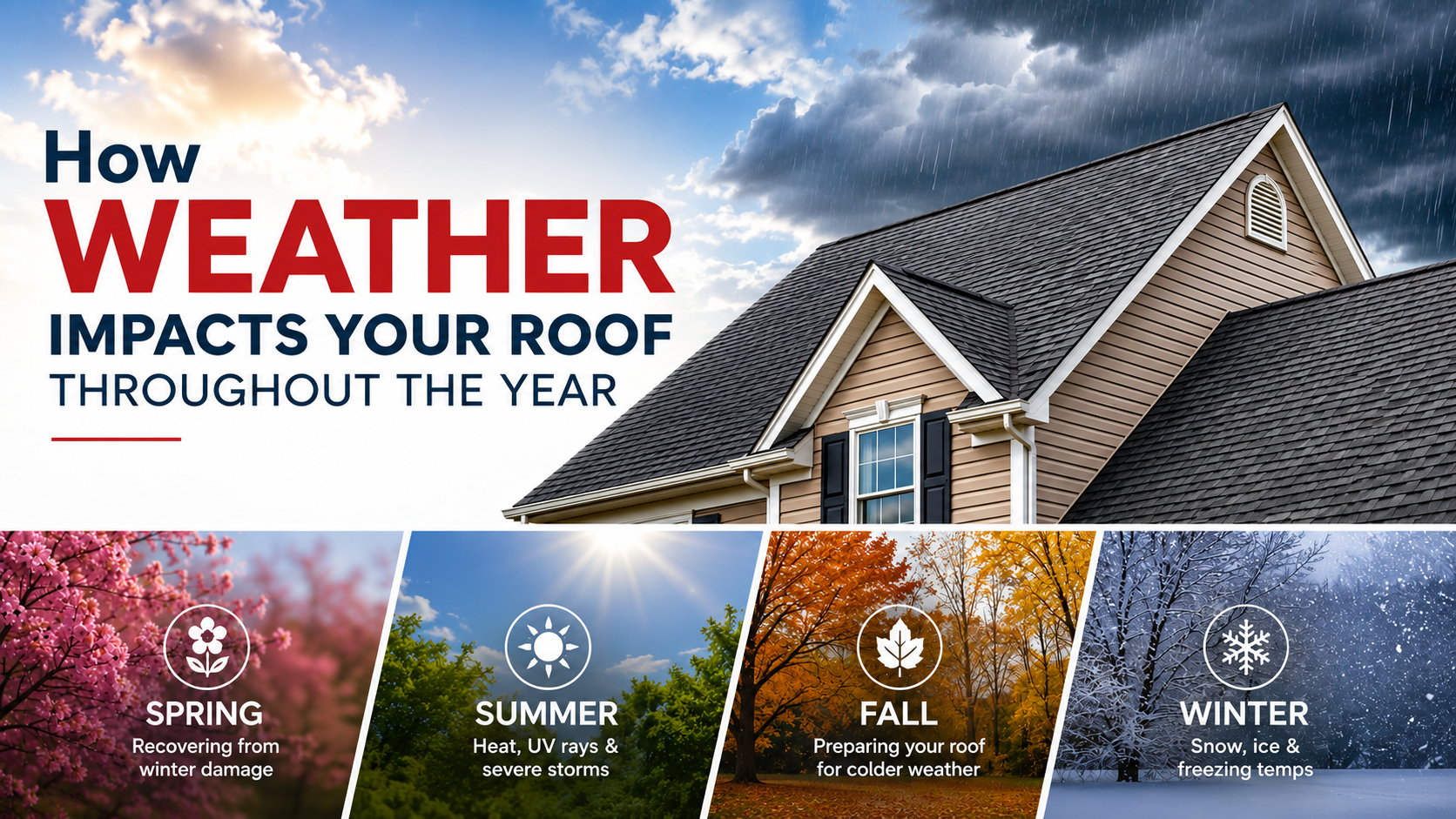
Your roof is your home’s first line of defense against the elements. While many homeowners only think about their roof when a leak appears, the truth is that weather affects roofing systems every single day. From scorching summer temperatures and heavy thunderstorms to freezing winter conditions and strong winds, your roof endures constant exposure to changing weather throughout the year.
Understanding how seasonal weather impacts your roof can help you identify potential issues early, extend the life of your roofing system, and avoid costly repairs. At John Peters Roofing, we help homeowners protect their investments by providing professional inspections, repairs, and roof replacements designed to withstand Indiana’s changing climate.
Spring: Recovering From Winter Damage
Spring is often when roofing problems that developed during winter become visible. As temperatures rise and snow melts, homeowners may begin to notice signs of wear that were hidden during colder months.
Winter’s freeze-thaw cycle can be especially damaging to roofing materials. When moisture enters small cracks or gaps and freezes, it expands. As the ice melts and refreezes repeatedly, those tiny openings can grow larger, leading to damaged shingles, flashing problems, and potential leaks.
Spring rainstorms can quickly reveal these weaknesses. Water may find its way beneath damaged shingles or around deteriorated flashing, causing leaks inside the home.
Common Spring Roofing Issues
- Missing or damaged shingles
- Roof leaks discovered after snowmelt
- Flashing deterioration
- Clogged gutters from winter debris
- Mold and algae growth from excess moisture
Spring is one of the best times to schedule a professional roof inspection. Identifying and repairing winter damage early can prevent more expensive problems later in the year.
Summer: Heat and UV Exposure
Many homeowners assume severe storms are the greatest threat to their roof, but prolonged heat and sunlight can be just as damaging over time.
Indiana summers often bring high temperatures and extended sun exposure. Ultraviolet (UV) rays gradually break down roofing materials, causing shingles to become brittle, fade in color, and lose their protective granules.
As roofing materials heat up during the day and cool down at night, they expand and contract. This constant movement places stress on the roofing system and can eventually lead to cracking, warping, or loosening of materials.
How Heat Affects Different Roofing Materials
Asphalt shingles are particularly susceptible to UV degradation. Over time, excessive sun exposure can accelerate aging and reduce their lifespan.
Metal roofs generally perform well in hot weather but still experience expansion and contraction that can affect fasteners and seams if not properly installed.
Flat roofing systems can also experience heat-related wear, especially if standing water and direct sunlight are combined.
Signs of Summer Roof Damage
- Curling or blistering shingles
- Excessive granule loss
- Fading roof color
- Cracked roofing materials
- Higher attic temperatures
Proper attic ventilation plays a major role in protecting your roof during summer. A poorly ventilated attic can trap heat, increasing temperatures beneath the roof and accelerating material deterioration.
Summer Storms and Severe Weather
Summer is also storm season throughout much of Indiana. Thunderstorms can bring heavy rain, strong winds, hail, and lightning that may damage roofing systems in a matter of minutes.
Wind can lift shingles, loosen flashing, and expose vulnerable areas of the roof. Even if shingles are not completely torn away, they may become partially detached and vulnerable to future leaks.
Heavy rainfall can exploit even small roofing weaknesses. A roof that appears fine during dry weather may reveal hidden issues during a major storm.
Hail Damage Risks
Hailstorms are among the most destructive weather events for roofs.
Depending on the size and velocity of hailstones, damage may include:
- Bruised shingles
- Cracked shingles
- Granule loss
- Damaged flashing
- Dented metal roofing components
One challenge with hail damage is that it is not always immediately visible from the ground. Professional inspections can identify damage before it leads to more serious issues.
Fall: Preparing for Colder Weather
Fall serves as an important transition period for roofing systems. As temperatures cool and leaves begin to fall, homeowners have an opportunity to prepare their roofs for winter.
Leaves, twigs, and other debris can accumulate on roofs and inside gutters. If not removed, these materials can trap moisture and contribute to water damage.
Clogged gutters are particularly problematic because they prevent proper drainage. Water that cannot flow away from the roof may back up beneath shingles or contribute to ice dam formation later in winter.
Fall Roofing Maintenance Tasks
A fall roof inspection can help identify problems before cold weather arrives.
Important maintenance tasks include:
- Cleaning gutters and downspouts
- Removing roof debris
- Checking flashing and sealants
- Inspecting shingles for damage
- Trimming overhanging tree branches
Addressing minor issues during fall is often easier and less expensive than dealing with emergency repairs during winter.
Winter: Snow, Ice, and Freezing Temperatures
Winter can be one of the harshest seasons for any roofing system.
Snow accumulation adds significant weight to a roof. While properly designed roofs are built to handle snow loads, excessive accumulation can place additional stress on aging roofing systems.
Ice presents another challenge. As snow melts during the day and refreezes at night, ice can form along roof edges and inside gutters.
Understanding Ice Dams
Ice dams occur when warm air from the attic causes snow on the roof to melt. The water flows downward until it reaches colder roof edges where it refreezes.
Over time, a ridge of ice forms that prevents proper drainage. Water can then back up beneath shingles and enter the home.
Ice dams can cause:
- Roof leaks
- Damaged shingles
- Gutter damage
- Interior water damage
- Mold growth
Proper insulation and ventilation are essential for reducing the risk of ice dam formation.
Freeze-Thaw Damage
Indiana winters often experience fluctuating temperatures that create repeated freeze-thaw cycles.
When moisture enters roofing materials and freezes, expansion occurs. As temperatures rise, the ice melts and leaves behind larger cracks or openings.
Over multiple seasons, freeze-thaw damage can significantly shorten the lifespan of a roof if maintenance is neglected.
Wind Damage Throughout the Year
Strong winds are not limited to any one season.
Spring storms, summer thunderstorms, fall weather systems, and winter cold fronts can all generate powerful gusts capable of damaging roofs.
Wind damage may include:
- Missing shingles
- Lifted shingles
- Loose flashing
- Detached gutters
- Fallen tree branches
Even moderate wind events can weaken roofing components over time. Repeated exposure may eventually lead to leaks and structural concerns.
After major wind events, homeowners should inspect their property for visible signs of damage and schedule a professional inspection if concerns arise.
Moisture: A Year-Round Threat
While each season presents unique challenges, moisture remains one of the most consistent threats to roofing systems throughout the year.
Water can enter through:
- Damaged shingles
- Cracked flashing
- Improper roof penetrations
- Clogged gutters
- Aging roofing materials
Once moisture enters the roofing system, it can affect insulation, decking, ceilings, and interior walls.
Small leaks often go unnoticed until significant damage has already occurred. Routine inspections help identify vulnerable areas before water intrusion becomes a major problem.
How Regular Roof Inspections Help
Because weather affects roofs differently throughout the year, regular inspections are one of the best ways to protect your investment.
Professional roofing inspections can identify:
- Storm damage
- Missing shingles
- Flashing issues
- Gutter problems
- Early signs of leaks
- Ventilation concerns
- Structural weaknesses
Catching these issues early often allows for affordable repairs instead of costly replacements.
Many roofing experts recommend scheduling inspections at least once per year and after major storms.
Protecting Your Roof in Every Season
While weather is unavoidable, there are several proactive steps homeowners can take to minimize damage and extend roof life.
Keep Gutters Clean
Proper drainage is critical year-round. Clean gutters help direct water away from your roof and foundation.
Address Repairs Promptly
Small problems rarely stay small. Repairing damaged shingles or flashing early can prevent larger issues from developing.
Maintain Proper Ventilation
A well-ventilated attic helps regulate temperatures and reduces stress on roofing materials during both summer and winter.
Schedule Professional Inspections
Routine inspections provide peace of mind and help ensure your roof remains in excellent condition regardless of the season.
Trust John Peters Roofing to Protect Your Home
Your roof faces a constant battle against Indiana’s changing weather conditions. From summer heat and hailstorms to winter snow and ice, every season presents unique challenges that can impact the performance and lifespan of your roofing system.
At John Peters Roofing, we provide comprehensive roof inspections, repairs, storm damage assessments, and roof replacement services designed to keep your home protected year-round. Whether you need help after a severe storm or want to ensure your roof is ready for the next season, our experienced team is here to help.
Contact John Peters Roofing today to schedule a professional roof inspection and keep your home protected no matter what the weather brings.